

This module offers an interdisciplinary introduction to the study of the trauma of violent histories and their transgenerational repercussions. Students will review critical debates on trauma and memory studies. We will consider a decolonial epistemology that prompts us to rethink trauma and critically address the theoretical and ethical questions raised in studies that seek to understand the realities of painful and violent histories shaped by colonisation, oppression, discrimination, and racism. Students will engage with each other and critically evaluate content and texts that aim to broaden their focus beyond dominant literature, to interrogate the afterlives of traumatic histories and the institutional cultures that make these afterlives possible.
Themes of memory, memorialisation, and reckoning run throughout the module. With this focus, we will explore the histories of enslavement, colonial rule, segregation, and apartheid in South Africa. In doing so, this module will address questions surrounding the legacies of violent histories in the present. Through this focus, we wish not mean to imply that history does not predate colonial contact. Instead, we are interested in revealing the power structures that have constituted our shared histories and present-day realities. With the aim of understanding how violent histories have shaped the trajectory of South African society, this module will deepen students’ understanding of the afterlife of violent histories in individual, collective, and institutional terms. This module will incorporate seminars and site visits with the intention of exposing the socio-spatial imprints of the past on contemporary South Africa.
In exploring themes related to collective repair in the afterlife of violent pasts, the module will also engage with ways in which survivors mourn and work through the past, including rituals of mourning that do not always feature in mainstream European and North American perspectives. The concluding aim of the module will provide foundational knowledge and understanding that will prepare students for other modules in the programme, focusing on bearing witness and the pursuit of repair in the context of transgenerational legacies of violent histories.
Themes of memory, memorialisation, and reckoning run throughout the module. With this focus, we will explore the histories of enslavement, colonial rule, segregation, and apartheid in South Africa. In doing so, this module will address questions surrounding the legacies of violent histories in the present. Through this focus, we wish not mean to imply that history does not predate colonial contact. Instead, we are interested in revealing the power structures that have constituted our shared histories and present-day realities. With the aim of understanding how violent histories have shaped the trajectory of South African society, this module will deepen students’ understanding of the afterlife of violent histories in individual, collective, and institutional terms. This module will incorporate seminars and site visits with the intention of exposing the socio-spatial imprints of the past on contemporary South Africa.
In exploring themes related to collective repair in the afterlife of violent pasts, the module will also engage with ways in which survivors mourn and work through the past, including rituals of mourning that do not always feature in mainstream European and North American perspectives. The concluding aim of the module will provide foundational knowledge and understanding that will prepare students for other modules in the programme, focusing on bearing witness and the pursuit of repair in the context of transgenerational legacies of violent histories.
- Facilitator: Pumla Gobodo-Madikizela
- Facilitator: Lesedi Itumeleng Mashego
- Facilitator: Sophia Olivia Sanan
This module introduces students to qualitative research methods grounded in critical and decolonial approaches, with a focus on violent histories and the process of social repair. It complements and supports the Afterlife of Violence, Contextual Perspectives on Trauma Testimonies, and Historical Trauma and Redress modules, while laying the foundation for advanced study in Violent Histories and Repair.
This course will challenge you to think critically about the origins of social research methods and how they shape projects that seek to investigate sociocultural issues. By exploring the connections between methods and methodology, you will gain a deeper understanding of how research serves as a form of intervention across various contexts. You will understand the importance of historical, theoretical, and philosophical contexts from which Western research methods have emerged. Researchers do not apply a set of neutral techniques to research topics; rather, research is part of a dynamic engagement with sociocultural worlds, often marked by deep connections to colonial thought and power.
You will explore the importance of reflexivity among social researchers, that is, the capacity to reflect on who we are, what we bring to the research, and the ethics of accountability. You will develop an understanding of your subjective positioning and discuss how to decolonise your research practices. You will engage with diverse sources of knowledge and learn decolonising principles and practices as an ethical approach in complex and sensitive settings.
Students will explore the theoretical and epistemological underpinnings of qualitative inquiry and engage with methods of data collection (e.g., interviewing, focus groups, observations, and archival texts), analysis, interpretation, and dissemination. The course emphasises researcher reflexivity, ethical considerations, and power dynamics within the research process. Students will gain hands-on experiences in engaging ethically and critically with complex narratives.
Through interactive sessions, peer feedback, and experiential learning, students will develop research questions, apply methodological tools, and critically reflect on their positionality and the implications of research in contexts of trauma and historical injustice. This module is ideal for those seeking to develop ethically grounded, critically engaged research in fields concerned with violence, memory, identity, and social transformation.
This course will challenge you to think critically about the origins of social research methods and how they shape projects that seek to investigate sociocultural issues. By exploring the connections between methods and methodology, you will gain a deeper understanding of how research serves as a form of intervention across various contexts. You will understand the importance of historical, theoretical, and philosophical contexts from which Western research methods have emerged. Researchers do not apply a set of neutral techniques to research topics; rather, research is part of a dynamic engagement with sociocultural worlds, often marked by deep connections to colonial thought and power.
You will explore the importance of reflexivity among social researchers, that is, the capacity to reflect on who we are, what we bring to the research, and the ethics of accountability. You will develop an understanding of your subjective positioning and discuss how to decolonise your research practices. You will engage with diverse sources of knowledge and learn decolonising principles and practices as an ethical approach in complex and sensitive settings.
Students will explore the theoretical and epistemological underpinnings of qualitative inquiry and engage with methods of data collection (e.g., interviewing, focus groups, observations, and archival texts), analysis, interpretation, and dissemination. The course emphasises researcher reflexivity, ethical considerations, and power dynamics within the research process. Students will gain hands-on experiences in engaging ethically and critically with complex narratives.
Through interactive sessions, peer feedback, and experiential learning, students will develop research questions, apply methodological tools, and critically reflect on their positionality and the implications of research in contexts of trauma and historical injustice. This module is ideal for those seeking to develop ethically grounded, critically engaged research in fields concerned with violence, memory, identity, and social transformation.
- Facilitator: Akuch Kuol Anyieth
- Facilitator: Melanie Cilliers
- Facilitator: ANELL STACEY Daries
- Facilitator: Ella Bowie Hodge
- Facilitator: YUMI Omori
- Facilitator: Sophia Olivia Sanan
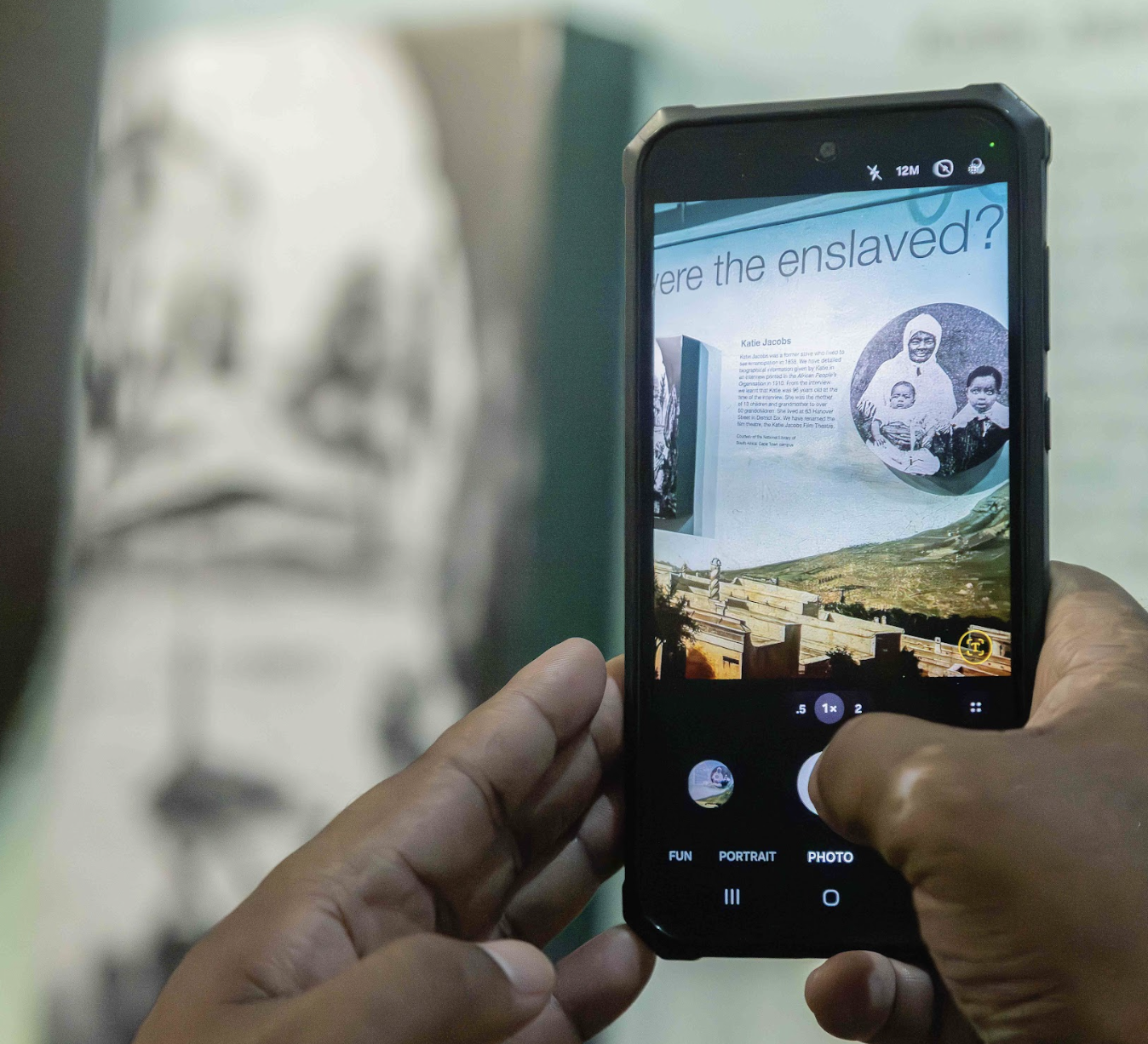
This module explores the ways in which historical trauma is socially constructed across generations through narratives, symbols, rituals, and cultural heritage. Moving beyond legal definitions of witnessing, we will examine testimony and bearing witness as processes by which survivors, perpetrators, and implicated others make their experiences intelligible. The course draws on diverse South African examples, including the TRC archives, site-specific art, and heritage projects, as well as global testimonial archives from Southern Africa, South America, Israel/Palestine, and narratives of former enslaved people. We will explore various forms of narratives and their representation including literary narratives, film, and visual and/or performance art, and ask what role they play in the quest for social healing. The module considers how representation and historicization can both reproduce and transform violence.
- Facilitator: ANELL STACEY Daries
- Facilitator: Sophia Olivia Sanan
- Facilitator: ANELL STACEY Daries
- Facilitator: THABOLWETHU TEMA Maphosa
- Facilitator: Sophia Olivia Sanan
- Facilitator: Wilhelm Johannes Verwoerd
